With a seemingly endless amount of streaming options -- not only the titles at our disposal, but services themselves -- we've taken it upon ourselves to ...
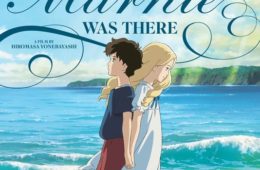
If Hiromasa Yonebayashi’s When Marnie Was There does turn out to be the last Studio Ghibli theatrical film, then the animation powerhouse will be going out on a...
How many movies feature zero chairs? How many chairs have you taken particular note of? They're a dressing so common that you (or at least I) never really t...
Since any New York City cinephile has a nearly suffocating wealth of theatrical options, we figured it’d be best to compile some of the more worthwhile repe...
If one is observing a body of work strictly from the outside, your favorite filmmaker's sense of timing can be hard to figure. It was eight years between Fl...
Cameron Crowe has made a career telling stories of flawed men who are saved thanks to young, quasi-magical women. His best films have shown the cracks in these ...
Returning to the independent world this year, Kevin Bacon brought Cop Car to Sundance, a thriller which he also served as executive producer. Directed by Jo...
Jude (David Dastmalchian) and Bobbie (Kim Shaw) look like the well-bred, fresh-faced couple you’d find at the beginning of any indie rom-com. The only differenc...
Can you call a movie a disaster flick without the President of the United States declaring a state of emergency? While I ask in jest, we do expect such a soberi...
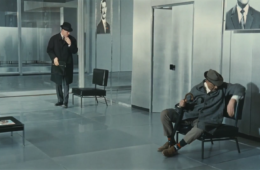
While there was a certain tendency in French cinema, two of the great directors of this era that would be exalted by Cahiers Du Cinema designed two very different yet complimentary systems to tell stories. On one side, the young blood of Jean-Pierre Melville, a so-called American in Paris, but more accurately, a geometrician of human calculations. On the other: the old master, Jean Renoir, who makes every moment of cinema feel accidentally captured, and thus indelibly human....